Zum Hauptinhalt springenZum Hauptinhalt springen
OpenAI führt Werbung in ChatGPT ein: Was das für die Nutzer bedeutet
Umělá inteligenceJanuary 26, 2026|8 min

OpenAI führt Werbung in ChatGPT ein: Was das für die Nutzer bedeutet

OpenAI testet Werbung in ChatGPT für 800 Millionen Nutzer. Wie wird sie aussehen, wen betrifft sie und was bedeutet das für KI-Assistenten?

T
Tým Apertia
Apertia.ai
Teilen:

Stellen Sie sich vor, Sie führen ein Gespräch mit dem intelligentesten Assistenten der Welt. Er hilft Ihnen bei der Arbeit, berät Sie bei persönlichen Problemen, erklärt komplexe Dinge. Und plötzlich empfiehlt er Ihnen am Ende seiner Antwort dezent ein Produkt, das Ihr Problem perfekt löst.

Nicht wie eine lästige Werbung, sondern wie ein hilfreicher Tipp von einem Freund, der Sie kennt. Genau so könnte die Werbung der Zukunft in ChatGPT aussehen.

Revolution in der digitalen Werbung

Mitte Januar 2026 machte OpenAI eine Ankündigung, die nicht nur die Zukunft der künstlichen Intelligenz verändert, sondern die gesamte Welt der digitalen Werbung. ChatGPT, das von 800 Millionen Menschen wöchentlich genutzt wird, beginnt mit dem Testen von Werbung.

Das ist nicht nur ein weiterer Werbekanal – es ist eine völlig neue Art, wie Marken Menschen in dem Moment erreichen können, in dem sie aktiv nach Lösungen suchen.

Warum OpenAI Einnahmen braucht

Sam Altman, CEO von OpenAI, bestand lange darauf, dass es keine Werbung in ChatGPT geben würde. Er befürchtete, das Vertrauen der Nutzer zu zerstören. Doch dann traf die Realität ein.

Der Betrieb von ChatGPT kostet OpenAI astronomische Summen – es wird geschätzt, dass das Unternehmen täglich 25 bis 125 Millionen Dollar allein für die Beantwortung von Nutzeranfragen ausgibt. Das sind bis zu 45 Milliarden Dollar jährlich.

Warum ist das so teuer?

Jede ChatGPT-Antwort erfordert enorme Rechenleistung. Stellen Sie sich Tausende der teuersten Computer vor, die rund um die Uhr laufen, 24 Stunden am Tag, 7 Tage die Woche.

Und das ist nur ein Bruchteil der Infrastruktur, die OpenAI benötigt.

Atemberaubende Zahlen

  • Das Training eines einzelnen GPT-4-Modells kostete 100–200 Millionen Dollar
  • Das kommende GPT-5 kann über 1 Milliarde Dollar kosten
  • Jede Anfrage kostet OpenAI 1–5 Cent
  • 2,5 Milliarden Anfragen täglich = massive Betriebskosten
  • Infrastrukturverträge im Wert von 1,4 Billionen Dollar

Obwohl OpenAI ungefähr 20 Milliarden Dollar jährlich verdient, reicht das immer noch nicht aus, um alle Kosten und ehrgeizigen Pläne zu decken. Deshalb hat sich das Unternehmen entschieden, die Hunderte Millionen Menschen zu monetarisieren, die ChatGPT kostenlos nutzen.

Wie die Werbung aussehen wird

OpenAI geht Werbung anders an als Facebook oder Google. Das ist kein Zufall – es ist eine sorgfältig entworfene Strategie, um das Vertrauen der Nutzer zu bewahren.

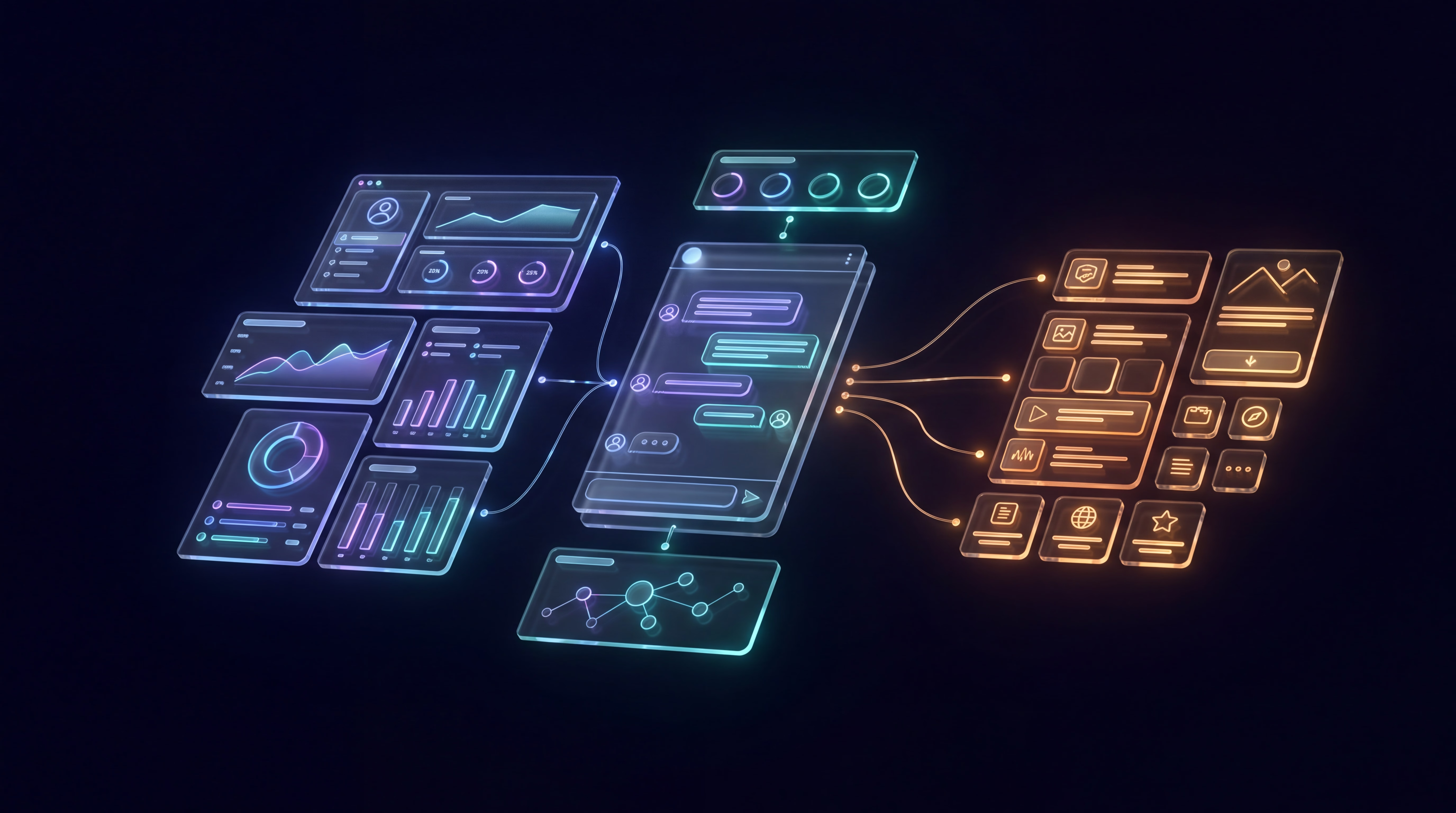
Werbung erscheint immer erst am Ende der ChatGPT-Antworten. Nie mitten im Gespräch. Warum? Weil es psychologisch der beste Moment ist.

Das unterscheidet sich völlig von:

  • YouTube – Werbung vor dem Video, die man überspringen muss
  • Facebook – Werbung zwischen Beiträgen von Freunden, verwirrend
  • Google – Werbung, die wie organische Ergebnisse aussieht

Was ChatGPT-Werbung einzigartig macht

ChatGPT hat einen enormen Vorteil: Es versteht den Kontext Ihres Gesprächs. Nicht nur einzelne Wörter, sondern das gesamte Problem, das Sie lösen.

When you write: "I want to start running marathons, but I've never been very athletic. I'm 35, have a few extra pounds and a limited budget," ChatGPT recognizes:

  • Anfängerbedürfnisse
  • Gesundheitsaspekte
  • Preissensibilität
  • Bedarf an Motivation und Unterstützung

Drei Wege der Werbezielgruppen

1. Einkaufsgespräche

When it's clear you want to buy something, ChatGPT recognizes it. A question like "Which laptop under $1,500 is best for programming?" is a clear signal.

These queries make up about 2.1 percent, but they're the most valuable users – they've almost made their decision.

2. Ihre langfristigen Interessen

If you regularly discuss photography, travel, or programming with ChatGPT, the system notices. It may show you relevant ads even during other topics.

Personalization can be turned off.

3. Seitenleiste

They're also testing a variant where ads would be in a side panel, outside the main conversation flow. Similar to Google – you see them, but they don't interfere with reading.

Wer Werbung sehen wird und wer nicht

OpenAI has clearly divided this by subscription tiers:

WERDEN Werbung sehen:

  • Kostenlose Nutzer – primäre Zielgruppe
  • ChatGPT Go ($10/month) – günstigeres Abo mit Werbung
  • Erwachsene Nutzer (18+) – Werbung nur für Volljährige

WERDEN KEINE Werbung sehen:

  • ChatGPT Plus (~$20/month) – bezahlter Komfort ohne Werbung
  • ChatGPT Pro (~$200/month) – Premium-Version
  • Unternehmensversionen – saubere Arbeitsumgebung
  • Minderjährige (under 18) – automatischer Schutz

ChatGPT Go – Der goldene Mittelweg

Along with ads, OpenAI expanded the new ChatGPT Go tier. It's a compromise between the free version and expensive Plus.

What you get for $10/month:

Maßgeschneiderte KI-Lösung gewünscht?

Wir helfen Unternehmen, Prozesse mit KI zu automatisieren. Kontaktieren Sie uns und erfahren Sie, wie wir Ihnen helfen können.

  • Antwort innerhalb von 24 Stunden
  • Unverbindliche Beratung
  • Maßgeschneiderte Lösungen für Ihr Unternehmen
Weitere Kontakte
  • Significantly more monthly messages than free
  • File uploads to chat
  • Image generation with DALL-E
  • Faster responses
  • But... ads are displayed

OpenAI's Promises – And Why to Believe Them

OpenAI knows they're letting the genie out of the bottle. Ads could disrupt the trust they've built over two years. That's why they came up with seven specific promises:

1. Ads Will Never Influence Answers

"We will never take money to change the answer we give you." When you ask "Which smartphone is best?", ChatGPT will recommend the truly best model for your needs.

2. Your Conversations Remain Private

"We never share the content of your chats with advertisers." Advertisers get only general signals like "user is interested in fitness," not specific conversation content.

3. We'll Never Sell Your Data

Similar to Facebook and Google – they don't sell data, but access to you. Advertisers get the ability to reach you, but not your actual data.

4. Other Transparency Guarantees

  • You'll always know why you see a specific ad
  • You can reject ads
  • They're clearly separated from answers
  • You can turn off personalization
  • A paid version without ads always exists

What's Forbidden – Protecting Sensitive Topics

OpenAI established clear boundaries where ads won't appear. You won't see ads on these topics:

  • Health – disease symptoms, medications, medical advice
  • Mental health – depression, anxiety, psychological problems
  • Politics – political discussions and analyses
  • Gambling and alcohol – regulated topics
  • Finance – investment advice and financial planning

This is both ethical and a legal necessity – many countries strictly regulate how you can advertise these products.

Google vs. OpenAI – Battle of Giants

Google is watching OpenAI like a hawk and preparing its own response. Google announced it will also introduce ads to its AI assistant Gemini in 2026.

Google's Advantages:

  • 25 years of advertising ecosystem experience
  • Millions of existing advertisers
  • Massive data sources
  • $200+ billion annually from ads

OpenAI's Advantages:

  • Deep understanding of conversation context
  • Intimate knowledge of user motivations and goals
  • Brand of innovator and AI leader
  • Agility and innovation speed

Google will dominate "capture demand" – when someone knows what they want. ChatGPT may dominate "create demand" – when you don't know exactly what you need yet.

How Much It Will Cost – AI Advertising Economics

For companies, the key question is: Will it pay off? Expected prices:

  • Basic contextual advertising: $0.60–$1.20 per thousand impressions
  • Personalized advertising: $1.60–$3.20 per thousand impressions
  • B2B audience: $3.20–$6 per thousand impressions
  • High purchase intent: $4–$8+ per thousand impressions

Comparison with Competition:

  • Google Display: $0.08–$0.40 (mass reach, low engagement)
  • Facebook/Instagram: $0.40–$0.80 (social context)
  • LinkedIn: $1.20–$3.20 (professional network)
  • ChatGPT: $1.60–$3.20 (deep context, active decision-making)

What the Future Holds

Ads in ChatGPT are just the beginning. In an ideal world, ads will be so relevant and useful that users will perceive them as added value, not annoying spam.

Optimistic Scenario

Imagine discussing travel to Iceland with ChatGPT. You're figuring out when to go, what to see, how to prepare for weather. At the end, an offer appears: a complete Iceland guide from someone who actually lives there.

At that moment, you don't perceive the ad as an ad. It's a logical continuation of the conversation. Exactly what you were looking for.

Realistic Scenario

The first 6-12 months will be a period of experimentation. Some ads will be surprisingly useful, others disruptive. OpenAI will continuously tune the system.

After one to two years, the model will likely stabilize at an acceptable level – not perfect, but functional and predictable.

Warning Signs

  • Ads start appearing in paid versions too
  • Personalization becomes more aggressive and less transparent
  • Responses seem commercially influenced

Fazit: Neue Ära der KI-Assistenten

OpenAI has strong motivation not to break user trust – their entire business is built on it. At the same time, they need to generate massive revenue to maintain development pace.

The result will be constant balancing between monetization and experience quality. And that's where this entire story will be decided.

Die Zukunft der KI-Werbung beginnt genau jetzt. Und wir alle sind ihre ersten Zeugen und Teilnehmer.

Bereit loszulegen?

Interessiert an diesem Artikel?

Lassen Sie uns gemeinsam erkunden, wie KI Ihr Unternehmen transformieren kann.

Kontaktieren Sie uns